FD-IX introduces AI Gravity
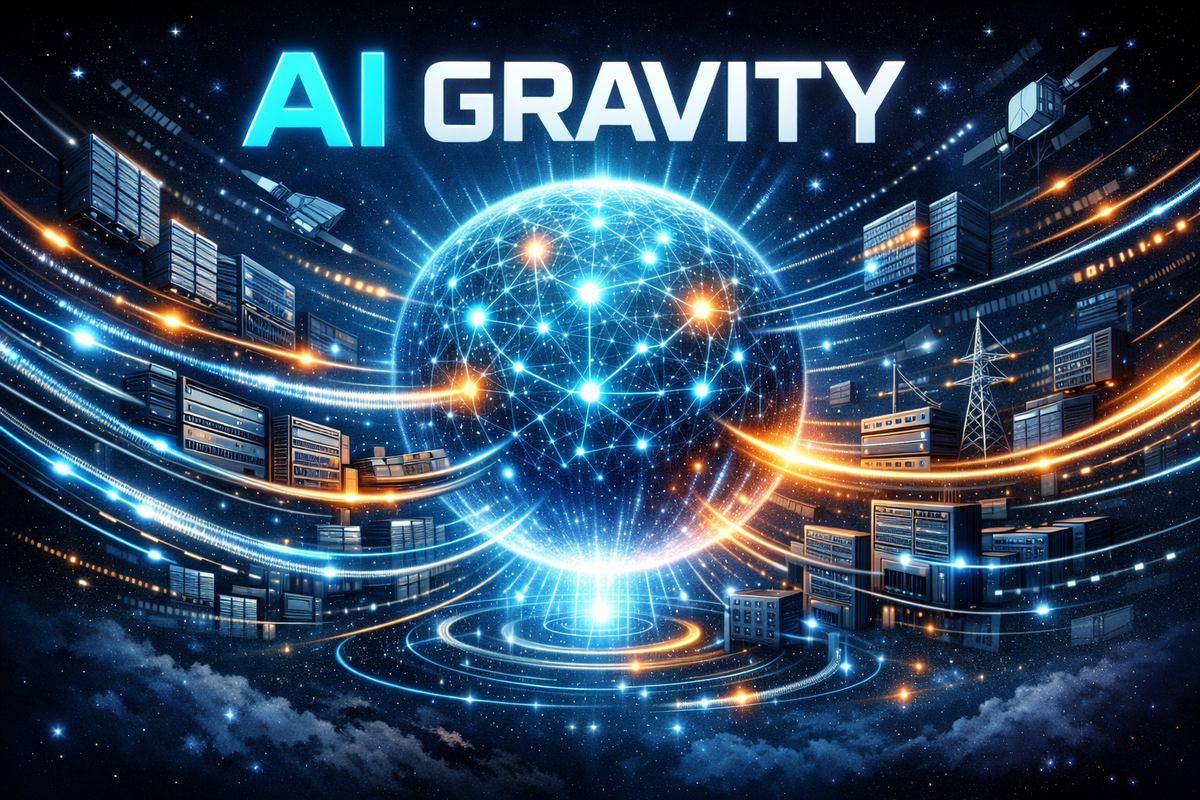
Most networks move traffic toward users. AI operates differently. It draws resources toward the compute environment.
This effect is called AI gravity.
Data, storage, and networks begin to cluster around large AI compute environments, just as planets pull objects into orbit. Once the compute lands somewhere, everything else starts moving toward it. This is not marketing language; it results directly from physics, bandwidth constraints, and economic factors.
What AI Gravity Is
AI gravity describes how large GPU nodes attract infrastructure. Training models requires massive datasets that must reside close to the GPUs performing the training. Transferring petabytes over long distances is slow and costly, even on large backbone networks. As a result, companies position data near the compute rather than relocating compute to the data.
Once the GPUs arrive, other things follow:
• Storage platforms
• Data pipelines
• AI startups
• Model serving platforms
• High-capacity network interconnects.
This process transforms the area into an AI hub. This pattern is evident where hyperscalers deploy large clusters: compute is established first, followed by ecosystem growth.
Bandwidth Is the Limiting Factor
AI traffic behaves differently from typical internet traffic. Traditional internet networks were built for user access. Video streaming, web traffic, gaming, and SaaS mostly move traffic toward eyeball networks. AI traffic is different. It is dominated by east-west data movement between systems that sit close together.
These workloads move enormous volumes of data. Latency also matters because GPU nodes must synchronize constantly. This is why AI clusters rely on extremely fast interconnect.400G is common and almost too slow these days
800G solutions are currently being deployed.
Slower connections quickly become bottlenecks. In clusters with tens of thousands of GPUs, the network is as critical as the compute resources.
Why AI Creates New Interconnection Hubs
Due to the large data volumes involved, companies cannot rely solely on traditional internet transit. Transit networks were built for bursty consumer traffic, while AI training traffic is steady, massive, and often internal between partners. This pushes companies toward direct interconnection. Rather than sending traffic across the open internet, networks connect directly at high-capacity exchange points or data centers. These facilities function as AI interconnection hubs.
Inside these hubs, you typically find:
• Hyperscale cloud providers
• AI model companies
• Storage platforms
• Data pipeline providers
• Fiber backbone networks
High network density reduces latency and costs. Once a critical mass of participants is reached, the hub becomes difficult to replace. This demonstrates AI gravity in action.
The Network Becomes Part of the Compute
Traditional data center networking focused on connecting servers to the internet. In AI infrastructure, the network is integrated as part of the compute system.A GPU cluster spanning multiple data halls or buildings requires extremely high-capacity links. The interconnect fabric must transfer data quickly enough to prevent GPUs from idling. Network slowdowns result in costly idle resources. For this reason, modern AI environments treat networking as core infrastructure rather than simple connectivity.
What This Means for the Internet
AI gravity is already reshaping the location of infrastructure. Large GPU arrays attract:
• fiber routes
• data pipelines
• storage systems
• AI companies
Regions that host major AI compute begin to pull in even more infrastructure. Over time, these regions become AI corridors with extremely high bandwidth density. This process resembles what the early internet exchanges. Once enough networks were connected in one place, traffic naturally flowed there. The difference is scale. AI workloads move orders of magnitude more data than traditional internet applications.
A Simple Way to Think About It
Cloud computing shifted applications into data centers. AI shifts data and networks toward compute clusters. Where GPUs are deployed, the supporting ecosystem develops. This is AI gravity, and it is where FD-IX.ai becomes relevant.